
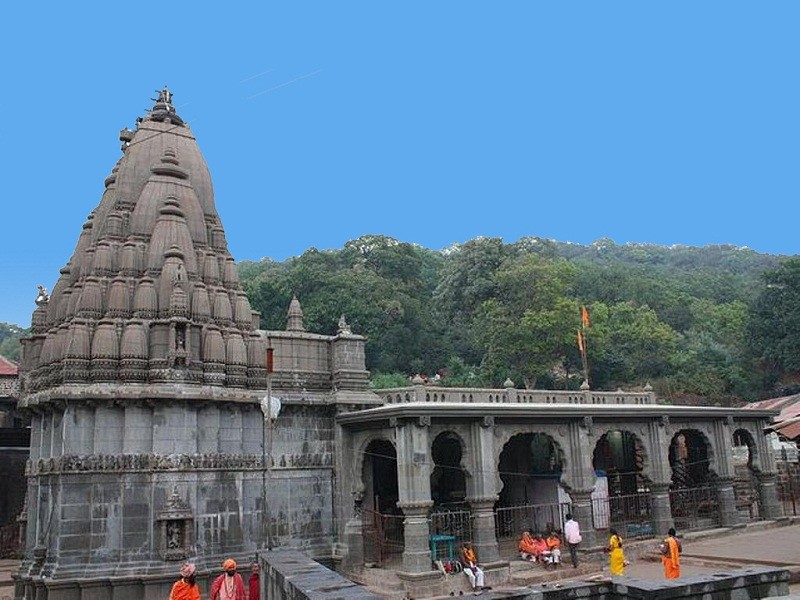
One of Lord Shiva’s twelve Jyotirlingas is Bhimashankar.
It is thought to be the location where Lord Shiva vanquished the demon Tripurasura by assuming the Rudra avatar.In addition to being a part of the Bhimashankar Wildlife Sanctuary, the temple is a well-known pilgrimage destination.?One of Lord Shiva’s twelve sacred Jyotirlingas, Bhimashankar Temple is a highly regarded Hindu pilgrimage site.After vanquishing the demon Tripurasura, Lord Shiva is said to have made his appearance here as a Jyotirlinga.
Nestled in the verdant Sahyadri hills, the temple is a stunning blend of spiritual tranquility and ancient Nagara-style architecture.The Maratha king Nana Phadnavis added to the temple, which had been constructed in the 13th century.Additionally, it is the source of the Bhima River, which eventually joins the Krishna River.
You can find complete details about visiting Bhimashankar temple darshan and Puja the website above.
Opening Timing - 04:30 AM Closing Timing - 09:00 PM
Morning Puja: 7:00 AM
Afternoon Puja: 1:00 PM
Evening Puja: 7:00 PM
Traditional and Formal clothing
Not allowed
Available
Bhimashankar Temple is located in Bhorgiri village, in Khed Taluka of Pune district, Maharashtra, India. It is situated in the scenic Sahyadri Hills (Western Ghats), approximately 110 to 125 km from Pune and around 213 km from Mumbai. The temple is nestled in a dense forest area that is also a wildlife sanctuary, making it both a spiritual and natural destination.
Bhimashankar Temple is special because it is one of the 12 sacred Jyotirlingas of Lord Shiva in India. According to Hindu mythology, Lord Shiva manifested here in the form of a Jyotirlinga to defeat the demon Tripurasura, who was causing havoc across the three worlds. This divine intervention made the site spiritually powerful.
The best time to visit Bhimashankar Temple is during the winter and early summer months, from October to March, when the weather is cool and pleasant. This season makes travel and temple exploration comfortable.
Yes, booking is required for daily darshan Rudrabhishek and Puja are managed on our site itself.
Men must remove shirts/belts/baniyans before entering the inner sanctum (garbhagriha). Dhoti or traditional attire recommended.
Women should wear modest, traditional Indian attire like saree, salwar-kameez, and cover shoulders/knees
It is one of the 12 Jyotirlingas of Lord Shiva—the final one—and holds deep mythological and spiritual significance

Your one-stop online platform for hassle-free, personalized Hindu puja services — book pandits, samagri & rituals anywhere in India
Join our growing community of over 100,000+ devotees who receive divine updates filled with spiritual tips, festival reminders, special puja offers, and more uplifting content.